R-value measures how well insulation resists heat flow — the higher the number, the better the insulation performs. But the right R-value isn’t universal: it depends on your climate and which part of the house you’re insulating. Here’s exactly what Kansas City homes need, and how to tell whether yours measures up.
Kansas City Is in Climate Zone 4 (Right on the Edge of Zone 5)
The Department of Energy divides the U.S. into climate zones, and the Kansas City metro — including Johnson County, KS and Jackson, Clay, and Platte Counties in MO — falls in IECC Climate Zone 4. We sit close to the Zone 5 boundary, though, and KC winters regularly dip below what ‘mild’ Zone 4 cities experience. That’s why local pros recommend targeting the upper end of ENERGY STAR’s Zone 4 ranges.
Recommended R-Values for Kansas City Homes
| Area of home | Recommended R-value | Notes |
| Attic (existing home) | R-49 to R-60 | About 14–18+ inches of blown insulation; the #1 priority in most KC homes |
| Attic (new construction) | R-60 | Required under the 2021 IECC adopted in Kansas City, MO |
| Exterior walls (2×4, existing) | R-13 to R-15 | Dense-pack retrofit via drill & fill |
| Exterior walls (new construction) | R-20+ (or R-13 + continuous) | Per current energy code; verify with your jurisdiction |
| Floors over crawl spaces | R-25 to R-30 | |
| Crawl space walls | R-10 to R-19 | Pair with vapor barrier / encapsulation |
| Basement walls | R-10 to R-15 | Continuous insulation performs best |
| Rim joists | R-10+ (closed-cell foam) | Common hidden leak point in KC basements |
How Many Inches Is That? R-Value by Material
R-value per inch varies a lot by material, which is why ‘how many inches do I need’ has no single answer:
| Material | R-value per inch | Inches needed for R-49 (attic) |
| Blown fiberglass | R-2.2 to R-2.7 | 18–22 inches |
| Blown cellulose | R-3.2 to R-3.8 | 13–15 inches |
| Fiberglass batts | R-3.1 to R-4.3 | 12–16 inches |
| Open-cell spray foam | R-3.5 to R-3.8 | 13–14 inches |
| Closed-cell spray foam | R-6 to R-7 | 7–8 inches |
Henges installs all of these: blow-in fiberglass, cellulose, fiberglass batts, and spray foam — so our recommendation is based on your home and budget, not a single product line.
How to Check What You Have Now
- Look in your attic. Take a tape measure and a flashlight to the attic hatch — you don’t need to walk the attic.
- Check the depth against the joists. If you can see the tops of the ceiling joists (usually 2x6s or 2x8s, so 6–8 inches), you’re likely at R-19 or below — half or less of what KC requires.
- Look at the condition, not just depth. Loose fill that has settled, is discolored, or shows animal disturbance has lost R-value regardless of depth.
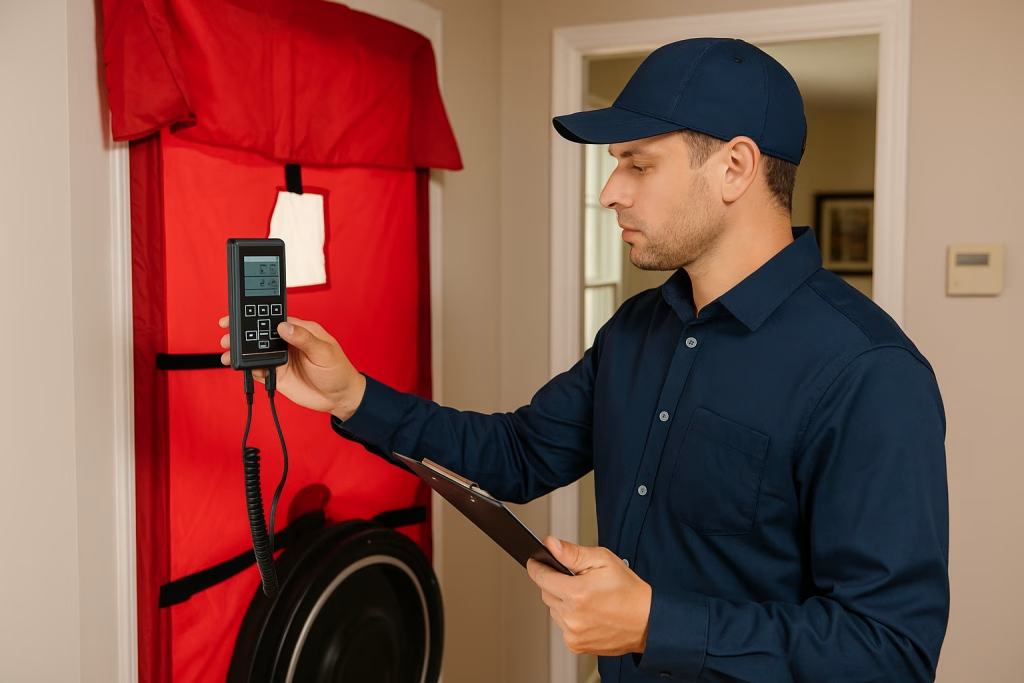
- Get it measured properly. A professional energy audit measures actual performance — including air leakage, which R-value alone doesn’t capture.
Rule of thumb for Kansas City: if your attic insulation is less than 14 inches deep, adding more attic insulation will almost certainly pay for itself. (Here’s why the attic delivers the biggest energy savings in KC homes.)
Why Many KC Homes Fall Short
Most homes in the metro built before the 1990s were insulated to R-11 through R-19 in the attic — standard at the time, but a third of today’s recommendation. Insulation also settles and degrades: cellulose and fiberglass lose loft over decades, and air leakage around can lights, chases, and attic hatches undercuts whatever R-value is on paper. If your insulation is wet, moldy, or pest-damaged, removal and replacement is the right call before topping up.
R-Value Isn’t Everything: The Air Sealing Factor
Two attics with identical R-49 ratings can perform very differently if one leaks air and the other doesn’t. R-value measures resistance to conductive heat flow, but in Kansas City’s windy, high-humidity climate, air movement through gaps can erase a large share of rated performance. The highest-performing approach combines air sealing with the right R-value — which is exactly how we scope attic projects.
Frequently Asked Questions
What R-value do I need for my attic in Kansas City?
R-49 to R-60. Kansas City is in climate zone 4, and because we sit near the zone 5 line, the upper end of that range is the safer target. New construction in Kansas City, MO requires R-60 under the 2021 energy code.
How many inches of blown insulation is R-49?
Roughly 13–15 inches of blown cellulose or 18–22 inches of blown fiberglass, depending on the product. Closed-cell spray foam reaches R-49 in about 7–8 inches.
Is R-30 enough for an attic in Missouri or Kansas?
No — R-30 is below the recommended range for our climate zone. Topping up from R-30 to R-49+ is one of the most cost-effective upgrades a KC homeowner can make. See our 2026 cost guide for typical pricing.
Can I add new insulation on top of old?
Usually yes, as long as the existing insulation is dry and in good condition. Wet, moldy, or pest-contaminated insulation should be removed and replaced first.
Does higher R-value always mean lower bills?
Up to a point — but only if air leaks are sealed. Past R-60 in our climate, returns diminish; your money is better spent on air sealing, crawl space, or basement insulation.
Find Out Where Your Home Stands
Not sure what’s in your attic or walls? Henges Insulation has measured and upgraded Kansas City homes since 1932. Schedule a free assessment or a full energy audit, and we’ll tell you exactly what R-value you have, what you need, and what it will cost to close the gap.